The Kainan Post

The best AI can get

Sunday, April 19, 2026·

Sunday, March 29, 2026

Why Europe's $25B in VC Capital Barely Touches Israeli Startups
Israeli startups raised $15.6 billion in 2025 and generated $74 billion in exits, yet analysis of 280 companies reveals only 7% have European independent VCs on their cap tables—with 86% of large seed rounds showing zero European participation. The structural gap traces to how US venture capital built its Israeli advantage: firms like Sequoia and Greylock first encountered Israeli founders relocating to Silicon Valley for Series A/B rounds, then developed pattern recognition and founder networks that moved them upstream to seed investing in Israel. European firms collectively managing over $25 billion—including Atomico, Balderton, and EQT Ventures—do not appear on a single cap table across the entire five-year dataset, as Israeli founders historically prioritized US market access and networks over European expansion.
See also on:www.legal500.com
From Near-Bankruptcy to Scale: What Sunbit's Arad Levertov Teaches the Next Generation

Through Israel's Growth+ mentorship initiative, Sunbit CEO Arad Levertov shared hard-won lessons with DevRob founder Adi Assayag Elmakis, including how he navigated a near-death moment when the fintech company was $25,000 away from insolvency with 50 employees on payroll. Levertov's core thesis: investors back results, not narrative—a principle he applied to advising Elmakis on pricing, hiring, and positioning in manufacturing AI. The mentorship reveals how cross-sector founder-to-founder knowledge transfer addresses the universal scaling challenges that separate surviving startups from failed ones: customer adoption, investor relations, and organizational resilience.

How OncoHost's AI Moved from Lab to 200 Cancer Centers—and Won

Israeli precision oncology company OncoHost won the 2026 AI Excellence Award for its PROphet® platform, which uses machine learning and plasma proteomics to predict immunotherapy response and guide treatment decisions in real clinical settings. The platform analyzes over 7,000 proteins per patient and has been deployed across approximately 200 U.S. cancer centers, enabling oncologists to avoid ineffective therapies and make data-driven treatment choices with measurable clinical impact. The award underscores OncoHost's success in translating AI from research into operational deployment—a rare achievement that separates biotech startups that generate publishable results from those that actually change patient outcomes.

Israeli RNAi Startup Silexion Advances Pancreatic Cancer Therapy to Phase 2/3 Trials

Israeli biotech company Silexion received approval from the Ministry of Health to advance SIL204—an RNAi therapy targeting KRAS mutations present in over 90% of pancreatic cancers—into Phase 2/3 human trials starting Q2 2026. The milestone follows successful toxicology studies and preclinical results showing significant anti-tumor activity across multiple models, positioning Silexion to tackle one of oncology's most intractable targets. The company plans to file additional clinical trial applications in Germany by end of Q1 2026 and across the European Union in early 2027, signaling a deliberate multi-market regulatory strategy.

Israeli AI Startup Tenzai Hacks Better Than 99% of Humans—for $5,000

Israeli cybersecurity startup Tenzai demonstrated that its AI agent outperformed 99% of 125,000 human competitors across six capture-the-flag (CTF) tournaments this month, successfully chaining exploits against complex software vulnerabilities at scale. The company adapted large language models from OpenAI and Anthropic for offensive security work, competing in both traditional web application challenges and emerging AI-focused attacks that exploit language models through prompt injection. Most striking: Tenzai executed all tournament runs for just $5,000—a cost so low that state actors, cybercriminal organizations, and even university students with malicious intent could feasibly deploy similar AI-powered attacks, signaling that offensive AI capabilities are rapidly democratizing beyond military and intelligence agencies.

Fusion's Guy Katsovich Bridges Pre-Seed and IPO: A Play to Keep Israeli Tech Value Domestic

Guy Katsovich, co-founder of Fusion—Israel's most active pre-seed fund managing approximately $50 million—is joining investment banking firm Mor-Langerman Capital as Director of IPOs while retaining his Fusion role, positioning himself to shepherd Israeli startups from seed through public markets. Fusion has backed over 140 startups with a combined value of around $3 billion, including exits like DigitalOwl (sold for over $200 million), giving Katsovich credibility across the funding spectrum. A former Unit 8200 intelligence officer and journalist, Katsovich argues that strengthening connections between Israel's public capital markets and its tech sector is critical to anchor economic value domestically rather than ceding upside to foreign acquirers and investors.

Israeli Pre-Seed Valuations Jump 17%: Angels Back Solo Founders, VCs Demand Working Products

Israeli pre-seed valuations surged 17% in 2025 to approximately $13.5 million, according to Fusion's annual report, with venture capital funds investing at higher valuations jumping sixfold from 3% to 18% year-over-year. The boom is fueled partly by solo founders gaining traction with angels—48% of angel investors made at least one investment in lone-entrepreneur ventures—though venture capital funds remain skeptical, with over 75% making zero such bets. AI has fundamentally shifted investment discipline: 68% of funds and 91% of angels now require a working product before funding, and the share of funds expecting startups to reach Series A within 6-12 months more than doubled to 51% in 2025, compressing the pre-seed window and raising the bar for capital.

Sunday, March 22, 2026

Israeli VC Rebounds: $8.7B Dry Powder Signals Resilience Amid Geopolitical Headwinds

Israeli venture capital is staging a sharp recovery: 47 new VC funds launched in 2025—more than double 2024's figure—with $8.7 billion in dry powder ready for deployment despite geopolitical uncertainty. The IVC Research Center and Israel Innovation Authority report shows Israeli funds raised nearly $900 million in 2025 for new investments, with $600 million expected in 2026, while foreign corporate venture participation in Series A and B rounds surged 45% year-over-year. Institutional investors are gaining ground, now accounting for 15% of total capital invested, signaling a meaningful diversification of the funding ecosystem beyond traditional players.
See also on:LinkedIn

The $111 Billion Illusion: Why Israeli Tech's Boom Masks Structural Decay

$111 billion flowed through Israel's technology sector in 2025—nearly four times the previous year—yet the country's high-tech economy reveals troubling structural weaknesses beneath the headline numbers. High-tech's share of GDP has flatlined for two consecutive years while startup formation declines and brain drain accelerates, with half of privately held Israeli tech company employees now based abroad. The core problem: a fractured economy where tech workers generate roughly $160,000 per worker in productivity versus $83,000 in domestic sectors, while Israelis work longer hours than OECD peers yet produce 20-25% less per hour worked. The result is a population facing Manhattan-level apartment prices on decidedly non-Silicon Valley salaries—a sustainability crisis masked by capital inflows.

Israeli Silicon Photonics Play: Tower Semiconductor and Oriole Target $80B AI Networking Market

Tower Semiconductor and Oriole Networks are collaborating on nanosecond optical circuit switching for AI data center networking, integrating lasers, amplification, switching, modulation, and detection on a single silicon photonics platform designed to deliver ultra-low, deterministic tail latency and high-bandwidth optical interconnects. The partnership will be showcased at OFC 2026 (March 17–19 in Los Angeles), with the announcement triggering an 11.10% stock gain for TSEM—adding approximately $1.58 billion to Tower's valuation—and reflecting strong market confidence in the $80 billion AI networking market projected by 2030.

The Resilience Paradox: Israeli Tech's Internal Fracture Over Geopolitical Sustainability

Israeli tech leaders are sharply divided on how ongoing conflicts impact their industry, with executives adopting the rallying cry 'Israeli Tech Delivers No Matter What' to reassure international clients while managing internal morale crises. The tension is visceral: CEOs are questioning mandatory office attendance given 50-minute commutes each way and air raid sirens during travel, while HR managers across Israeli and foreign tech companies emerge as key voices in strategic decisions about employee welfare. The result is a sector caught between external messaging of resilience and internal questions about long-term sustainability—with client hesitation and geopolitical instability creating uncertainty about whether the narrative can hold.

Eden Global Partners: Bridging Israeli Innovation and Global Capital at Scale

Eden Global Partners, a late-stage VC firm founded in 2021, positions itself as a bridge between Israeli tech entrepreneurs and international institutional capital, focusing on long-term patient capital across Technology, Aerospace and Defense, Industrial Innovation, Fintech, and Healthcare. Led by CEO David Dwek and President Laurence Goldberg—both with over two decades of experience in investment banking and principal investing—the firm executes complex, large-scale transactions by combining Israeli ecosystem knowledge with institutional relationships to connect Israeli innovation to global capital markets. The portfolio—including ZocDoc, SpaceX, Openly, UBQ, BlueVoyant, and Dataminr—reflects the firm's thesis: Israeli founders need more than capital; they need institutional credibility and global distribution to scale.

Nova Ltd Breaks the Israeli Discount: How Profitability Triggers European Revaluation

Nova Ltd (NASDAQ: NVMI), a Tel Aviv-based cloud software and digital infrastructure provider, reported 2025 revenue of approximately $285 million with 12-14% year-over-year growth, driven by its software division which now accounts for 62% of total revenue. The company returned to positive free cash flow of $31 million in 2025 and guided for 2026 revenue growth of 9-12% with adjusted EBITDA margins near 22%, up from 18.5% in 2025. The catalyst: Israeli tech stocks have historically traded at a significant discount to U.S. and European peers—Nova at 0.8-0.9x forward revenue versus cloud-software comparables at 2.5-3.5x—but Nova's credible free cash flow and margin-expansion roadmap have triggered a revaluation among European institutional investors, particularly German pension funds and Swiss insurance portfolios which together hold approximately 18-22% of the company's free float.

Organuz: The Deep-Tech Engine Automating Israel's Fragmented Solar Market

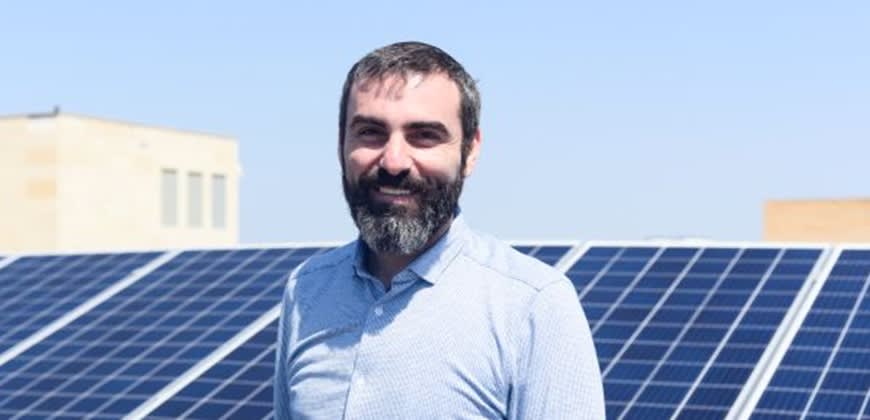
Organuz, founded by Elihu Drori, has built a deep-tech platform that manages the entire lifecycle of solar and energy storage projects—from planning and pricing through financing and execution—by analyzing dozens of engineering, meteorological, regulatory, and economic parameters in real time. The platform solves market fragmentation by connecting asset owners, entrepreneurs, contractors, equipment suppliers, and financing entities in a unified digital process, enabling decisions on solar panel installation capacity and economic viability within seconds. Organuz currently operates across Israel in partnership with dozens of contractors, entrepreneurs, local authorities, and property owners in the renewable energy sector, and is beginning to adapt the platform for international markets following recent inquiries from abroad.

Monday, March 16, 2026

Wiz's $32B Exit Windfall Flows Home: Israeli Tech Titans Bid for National Broadcaster

A consortium of Israeli mega-founders—Wiz CEO Assaf Rappaport, Riskified's Ido Gal, and Wix president Nir Zohar—is acquiring Reshet 13 from billionaire Len Blavatnik, with the Merit Spread Foundation controlling 75% of Channel 13 post-regulatory approval. The group plans to file its formal acquisition application to Israel's Second Authority for Television and Radio this week, combining Blavatnik's stake with fresh capital to stabilize the struggling broadcaster. The move signals a strategic pivot: Israeli tech founders are now deploying post-exit wealth into domestic infrastructure—media, not moonshots—betting on the ecosystem's long-term narrative.

From Rafael to IPO: How Israeli Defense Insiders Built Smart Shooter's Moat

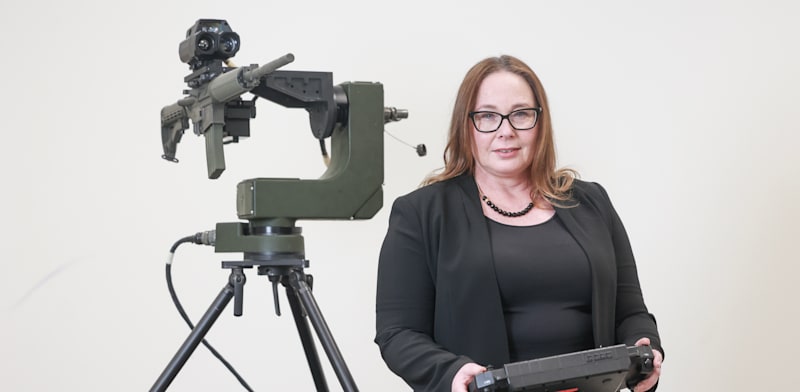
Smart Shooter's IPO exemplifies Israel's defense-to-enterprise playbook: co-founders Dr. Avraham Mazor (ex-Rafael Advanced Defense Systems senior manager) and Nitsan Alon (former Hostages and Missing Persons Command head) weaponized their military-industrial pedigree into precision targeting software for light weapons systems. During the public offering, both founders sold just 1% of their stakes for approximately NIS 2 million each—a calculated signal of conviction in valuation and long-term upside. The move reveals the hidden advantage Israeli defense startups exploit: institutional credibility, classified-world technical depth, and founder skin-in-the-game that institutional investors can't ignore.

Israeli Cyber Firms Hire Through the Sirens: A Bet on Resilience

While Iran's missile threats dominate headlines, Israeli cybersecurity companies are doubling down on hiring—a calculated wager that talent and product velocity matter more than geopolitical noise. Semperis is recruiting 50 positions from its Ramat Gan hub, while a 550-person firm is aggressively filling 120 development roles across software engineers, AI team leads, and DevOps specialists. A third player is recruiting over 70 employees focused on product and engineering. The hiring spree signals founder and investor conviction: in a sector where zero-day exploits and breach response are existential, Israeli firms believe their technical edge and war-tested talent pool are *recession and missile-proof*—and that the best engineers won't leave.
See also on:explore.st-aug.edu

TIER IV's Open-Source Bet: Breaking Hardware Lock-In in Level 4 Autonomy

TIER IV is democratizing Level 4 autonomous driving by releasing data-centric AI software stacks through its open-source Autoware platform, eliminating hardware vendor lock-in and letting automakers mix-and-match sensors and chips. The company is stress-testing its diffusion-model-based perception and end-to-end planning architecture through real-world validation across three global hubs—Tokyo, Pittsburgh, and Munich—in partnership with universities, continuously feeding operational data back into model refinement. By decoupling software from silicon, TIER IV is positioning itself as the Linux of autonomous driving: a neutral platform layer that lets OEMs and Tier-1s build custom stacks without betting their roadmap on a single chip vendor or sensor manufacturer.

Korean VCs Go Direct: SBVA's $1B Bet on Yann LeCun Signals Asia's Deep-Tech Power Play

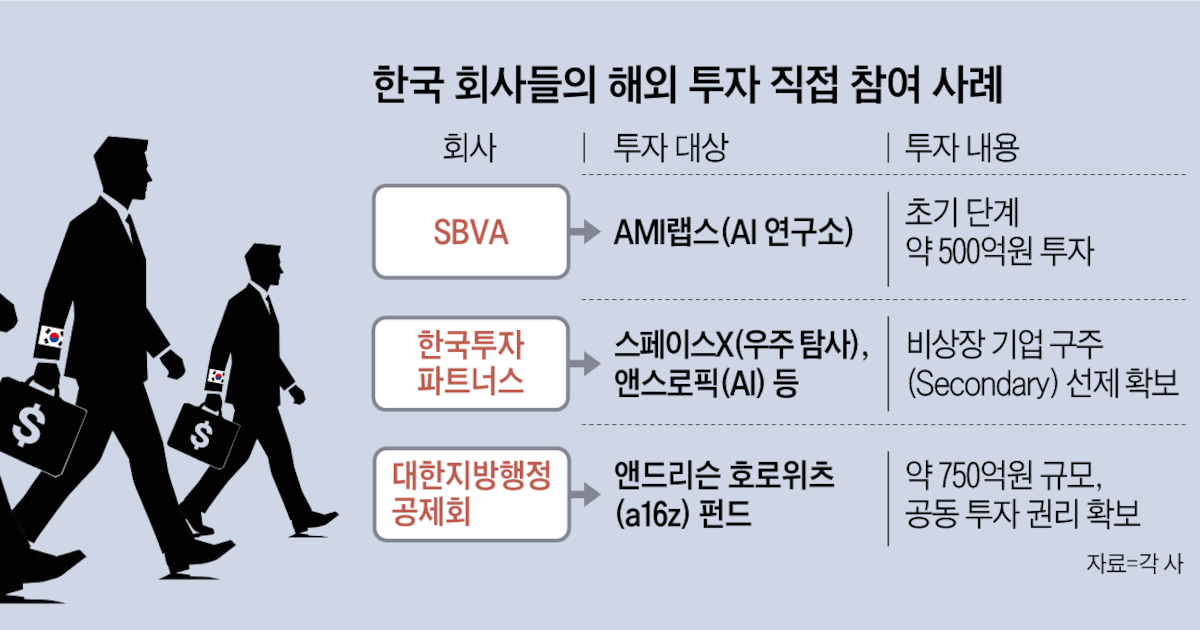
Korean venture capital is abandoning the sidelines. SBVA led a $1.03 billion funding round for AMI Labs, Yann LeCun's AI research institute spun from Meta, marking a seismic shift: Korean institutional investors are now making early-stage direct bets on source technologies rather than waiting for late-stage verification through fund-of-funds. The move signals a calculated strategy to capture AI and aerospace IP at the source, then leverage Korea's manufacturing and semiconductor infrastructure to commercialize globally. SBVA's framing is explicit: Korean VCs are no longer passive LPs in Silicon Valley's story—they're becoming active architects of the next generation of foundational AI, positioning Seoul and Busan as innovation hubs that can scale what the Valley invents.

Sunday, March 15, 2026

Jazz Emerges From Stealth With $61M to Weaponize AI Against Data Breaches

Israeli cybersecurity startup Jazz has raised $61 million across Seed and Series A to rebuild data loss prevention from scratch using contextual AI—a direct challenge to legacy DLP tools that have become blind spots in hybrid work environments. The funding signals renewed LP conviction in Israeli security startups tackling enterprise data protection at a moment when AI-driven threats are outpacing traditional defenses. Jazz's approach: use AI context to distinguish between legitimate data access and exfiltration attempts, turning a decades-old security category into a modern, AI-native problem.

Nvidia Acquires Illumex: The Israeli Data Infrastructure Playbook Scales Again

Nvidia has acquired Illumex, an Israeli data infrastructure startup founded by CEO Inna Tokarev Sela, in yet another validation of the repeatable Israeli playbook: build specialized, AI-adjacent data tools on $13 million in primarily Israeli capital, then exit to a hyperscaler hungry for infrastructure depth. The deal illustrates why Israeli founders dominate the unsexy-but-essential layer of the AI stack—they identify bottlenecks (data movement, processing, optimization) that giants like Nvidia must solve to scale. Illumex's exit joins a growing roster of Israeli infrastructure acquisitions, signaling that the next wave of Israeli exits won't chase consumer hype; they'll own the pipes.

India-Israel 'Special Strategic Partnership' Opens New Markets for Israeli Tech

India and Israel have formalized a 'Special Strategic Partnership' anchored by over 15 bilateral agreements spanning defense, AI, agriculture, and technology—a rare diplomatic escalation that transforms Israel's startup ecosystem into a strategic asset for New Delhi. Beyond defense, the pact explicitly targets AI collaboration and tech transfer, positioning Israeli founders and companies as preferred partners for India's digital ambitions. For Israeli VCs and startups, this signals a massive new market opening: India's 1.4 billion-person economy now has official policy backing to adopt Israeli innovation, from cybersecurity to agricultural tech. The partnership reflects a broader geopolitical shift—Israel is no longer just a US-aligned innovation hub, but a technology bridge between the West and Asia.

Iran Tensions Freeze Middle East VC: Israeli Startups Face Capital Drought Despite Geopolitical Resilience

Escalating US-Israel-Iran conflict has triggered a capital freeze across the Middle East, with banker travel halted, deal discussions stalled, and 20% of global LNG supply offline—a shock that's rippling directly into venture funding and startup deal flow. Israeli tech founders, accustomed to operating under geopolitical pressure, are discovering that even their proven resilience can't insulate them from LP risk aversion: institutional investors are pulling back from the region entirely, not because Israeli startups are weaker, but because the macro uncertainty has made allocation to the region politically and financially untenable. The paradox: Israel's startup ecosystem remains world-class, but the conflict is making it harder to access the capital that fuels it. For Israeli VCs and founders, this is a stress test of their international diversification strategies.

Israeli Tech Goes East: Azerbaijan and Kazakhstan Inject $500M+ Into Innovation Ecosystem

The Abraham Accords are reshaping Israeli capital flows in unexpected ways: Azerbaijan has invested over $500 million in Israel during H1 2025, while Kazakh industrial players like the Kusto Group are acquiring stakes in Israeli companies like Tambour (the country's largest paint manufacturer) to weaponize Israeli R&D for Central Asian scale. This isn't venture capital—it's strategic industrial consolidation. Kazakh and Azerbaijani firms are pairing Israel's innovation muscle with their manufacturing heft and resource access to build joint ventures in modular construction, advanced coatings, and agritech, then exporting the resulting products into European markets. For Israeli startups and tech founders, this signals a new LP class: non-traditional, resource-rich investors from the Caucasus and Central Asia willing to deploy serious capital for long-term industrial partnerships rather than quick exits.
See also on:www.jpost.com

Saturday, March 14, 2026

Israel's AI Infrastructure Moment: Nebius Lands $2B NVIDIA Deal as VAST Data Hits $30B Valuation

Nebius secured $2 billion from NVIDIA to build Israel's first supercomputer, while VAST Data simultaneously raised $1 billion at a $30 billion valuation—making it the most valuable private Israeli tech company. The dual mega-rounds signal that Israeli founders are winning the infrastructure layer of the global AI stack, building defensible, foundational solutions rather than chasing crowded application spaces. Investor confidence in Israeli deeptech persists despite geopolitical headwinds, underscoring the country's structural advantage in hardware and systems-level AI.

Wonderful Hits $2B Valuation on $150M Series B: Israeli AI Startup Cracks Non-English Markets

Israeli AI startup Wonderful, just 13 months old, reached a $2 billion valuation in its Series B led by Insight Partners, with $286 million total raised. The customer service AI platform's secret weapon: on-premises engineering teams deployed across 30 countries to customize solutions for non-English-speaking markets—a playbook competitors have largely ignored. With traction in telecom, finance, healthcare, and manufacturing, Wonderful plans to triple headcount from 300 to 900 and expand geographically, positioning itself as the enterprise AI vendor that actually understands localization and operational complexity.

Armadin Raises $189.9M for AI-Powered Cyber Defense, Led by Accel

Israeli cybersecurity startup Armadin secured a record-breaking $189.9M in Seed and Series A funding led by Accel, with backing from Google Ventures, Kleiner Perkins, and Menlo Ventures. The startup is building an AI-driven cyber defense platform to counter the emerging threat of AI-powered attacks—a category that has become a top-tier investor priority. The mega-round reflects broader confidence in Israeli cybersecurity founders and signals that defense-layer AI solutions command premium valuations in an era where traditional firewalls are obsolete.

Ex-Defense Brass Launch Onyx Security: $40M to Build AI Agent Control Plane

Israeli defense veterans Bar Kogan and Gil Elbaz launched Onyx Security with $40 million in funding from Conviction and Cyberstarts to solve a critical gap: securing and controlling autonomous AI agents at scale. The company's Onyx Guardian Agent is a supervisory AI system that continuously monitors and manages large fleets of AI agents, identifying risks and preventing rogue behavior in real-time. As enterprises race to deploy autonomous systems, Onyx positions itself as the control layer—a defensible, infrastructure-level play that leverages Israeli founders' deep expertise in security and autonomous systems.

Israel Quietly Kills AI Chip Export Controls: A Win for Deeptech Founders

The Israeli Commerce Ministry has withdrawn a proposed regulation restricting semiconductor and AI technology exports, signaling a strategic pivot toward enabling Israeli companies to compete in the global AI chip supply chain. The quiet reversal—likely driven by industry pressure and geopolitical calculus—removes a potential bottleneck for Israeli deeptech players like Nebius and other infrastructure-layer startups seeking to scale internationally. The move underscores the government's commitment to maintaining Israel's competitive edge in foundational AI infrastructure, even as export controls remain tight in other sensitive defense sectors.

Friday, March 13, 2026

Google's $32B Wiz Deal: The Moment Israeli Tech Stopped Chasing Exits

Google has closed its $32 billion acquisition of Wiz, the largest tech deal in Israeli history, after CEO Assaf Rappaport rejected a $23 billion offer in 2024—a rare act of founder conviction that forced Google to nearly 40% more. Wiz, which hit $1 billion in annual recurring revenue in 2025, will operate under its own brand within Google Cloud, positioning the Israeli cybersecurity powerhouse to solve a critical market gap: unified security across multi-cloud environments where enterprises juggle AWS, Azure, Oracle, and Google Cloud simultaneously. The deal's regulatory clearance signals that even in an era of antitrust scrutiny, transformative acquisitions of strategic tech assets can still close—and that Israeli founders are increasingly willing to bet on their own scale rather than accept the first offer.

Gili Raanan's Bold Bet: 10 More Wiz-Scale Companies Will Emerge From Israel

Gili Raanan, the Cyberstarts founder who cut Wiz's first check, is making a provocative prediction: Google's $32 billion acquisition will spawn at least 10 more billion-dollar Israeli security companies within a decade. His conviction rests on a specific mechanism—the Wiz deal doesn't just validate Israeli cybersecurity talent; it rewires founder ambition and investor capital allocation across the entire ecosystem. When a single exit resets the ceiling for what's possible, venture firms reprogram their theses, engineers defect from established firms to launch startups, and global acquirers begin treating Israeli security as a strategic asset class rather than a niche play. Raanan's forecast is less prediction than diagnosis: Wiz wasn't an anomaly; it was a template, and the ecosystem is now primed to execute it repeatedly.

StageOne's $165M Fifth Fund: The VC Thesis That Bets Against Automation

StageOne Ventures closed its $165 million fifth fund—bringing total AUM to over $650 million—with a deliberate bet against the industry's drift toward passive, algorithm-driven investing. Managing Partner Tal Slobodkin's firm doubles down on high-touch operational scaffolding for technical founders, particularly in AI infrastructure and agentic orchestration where Israeli engineers command a structural advantage. The fund's conviction is validated by track record: 21 exits and 29 active portfolio companies, with acquisitions by Cisco, JFrog, and Check Point proving that Israeli deep-tech founders backed by hands-on mentorship can scale into category-defining platforms. In an era when mega-funds automate due diligence and spray capital across hundreds of bets, StageOne's model—first-check investor, operational partner, founder therapist—represents a contrarian thesis: Israeli founders don't need more capital; they need smarter capital with skin in the game.
See also on:@IsraelTech

Wonderful's $2B Valuation in 4 Months: When Israeli AI Founders Move Faster Than Markets Can Price

Wonderful, an Israeli AI agent startup, closed its Series B at $2 billion valuation just four months after Series A—a velocity that exposes a deeper truth about Israeli AI infrastructure: founders are shipping faster than venture firms can deploy capital. The $150 million round reflects not generic enthusiasm for AI, but a specific conviction: Israeli teams building autonomous agent orchestration platforms have solved technical problems that Silicon Valley is still debating. This compressed funding cycle signals a market inefficiency—Israeli founders operating at startup-nation speed (where compressed timelines and resource constraints breed operational discipline) are outpacing the deliberate pace of traditional venture diligence. For LPs, the message is stark: if you're not moving at Israeli founder velocity, you're already behind.

Israeli Tech's Wartime Paradox: $74.3B in M&A While Sirens Sound

While air raid sirens punctuate Tel Aviv's skyline, Israeli tech is experiencing a counterintuitive boom: venture funding jumped 31% to $16 billion in 2025 (from $12.2 billion in 2024), and M&A activity exploded to a record $74.3 billion—a phenomenon that reveals a hidden truth about Israeli founder psychology. The ecosystem doesn't contract during conflict; it accelerates. Founders who've grown up under existential pressure treat geopolitical volatility as background noise, not a reason to pause. Global acquirers, meanwhile, see Israeli tech companies as battle-tested assets—security firms that've defended against real threats, infrastructure teams that've operated through actual chaos. The paradox isn't that Israeli tech thrives *despite* war; it's that war has become embedded in the founder DNA that makes Israeli companies valuable in the first place. When your market advantage is built on resilience, instability becomes a competitive moat.

Israeli Tech's Identity Crisis: Can Founders Built for Exits Learn to Stay?

Israel's startup ecosystem faces an uncomfortable reckoning: the same founder DNA that produces $1 billion exits in five years—scrappy, fast-moving, acquisition-ready—actively sabotages the $100 million-plus revenue platforms that global tech leaders are built on. The tension is structural: Israeli founders excel at product innovation and rapid iteration, but stumble when scaling requires the unglamorous work of organizational discipline, go-to-market rigor, and long-term market dominance. When international expansion pressure hits, sales and marketing functions cannibalize product strategy, eroding the technical differentiation that made the company valuable in the first place. The ecosystem's next evolution isn't about better funding or more capital—it's about founder psychology: can a generation trained to optimize for acquisition learn to optimize for endurance? Until Israeli VCs and founders embrace the boring, decade-long work of building category kings rather than acquisition targets, the ecosystem will remain a feeder system for American tech giants rather than a source of them.

ZyG's $58M Seed: When Top-Tier VCs Bet on Israeli AI to Solve eCommerce's Oldest Problem

ZyG, a Tel Aviv-based AI eCommerce startup, closed a $58 million seed round led by Bessemer, Viola, and Lightspeed—an unusually large check for early-stage that signals a specific conviction: Israeli AI teams can crack the eCommerce financing problem that's plagued the industry for two decades. The round's size and caliber of backers (three of the world's most selective mega-funds) suggests ZyG isn't just another AI application; it's solving a structural gap where AI-driven underwriting and dynamic financing can unlock billions in trapped commerce velocity. What's notable isn't that Israeli founders are raising capital—it's *which* founders are raising it and *why*. Bessemer, Viola, and Lightspeed don't deploy $58 million at seed stage for incremental improvements; they deploy it when they believe an Israeli team has a technical or operational advantage that competitors can't replicate. ZyG's funding is a vote of confidence in Israeli engineering's ability to apply AI to unsexy but high-value infrastructure problems.