The Tech Brief

Daily News About Artificial Intelligence & Robotics

Wednesday, March 4, 2026·

Tuesday, March 3, 2026

When Public Health Fails, UCLA Brings the Clinic to Skid Row

UCLA and City of Hope are doing what L.A. County won't: bringing cancer screening to unhoused women. A mobile clinic now rolls up to Union Rescue Mission with mammograms, staffed by third-year medical students and led by UCLA assistant clinical professor Dr. Mary Marfisee, removing the logistical barriers that have kept vulnerable women away from preventive care for years. The timing is brutal. L.A. County just shuttered seven of its 13 public health clinics due to a $50 million funding cut, leaving the most vulnerable with fewer places to go. For patients like 68-year-old Sharon Horton, the mobile clinic means finally getting screened after years of delay. Meanwhile, Skid Row's unsheltered population keeps growing even as countywide homelessness declines—a reminder that some neighborhoods are being left behind entirely.

Cardiff Biotech Antiverse Raises $9.3M to Use AI Where Lab Science Failed

Antiverse, a Cardiff-based biotech startup, just landed $9.3 million in Series A funding to scale its machine learning platform for discovering therapeutic antibodies—drugs that conventional lab methods have struggled to create for decades. The company targets the hardest protein families: G-protein coupled receptors and ion channels that have resisted traditional drug discovery. With more than $20 million raised cumulatively, Antiverse is positioning itself as a major player in the AI-drug discovery boom, backed by lead investor Soulmates Ventures. The new capital will fund platform scaling, advance internal drug candidates, and deepen partnerships with pharma companies desperate to crack undruggable disease targets. This is AI doing what humans couldn't: finding solutions to biological problems that looked impossible.

Ad Agencies Face a Reckoning: AI Just Made the Billable Hour Worthless

The advertising industry is in crisis. A new report from VoxComm and Lodestar Agency Consulting shows the math is brutal: profit margins have collapsed from 30% to just 10%, while creatives are producing nearly five times the output for the same or less pay than a decade ago. AI is the culprit—it's accelerated work production so fast that time-based pricing has become economically suicidal. Agencies trapped in what the report calls "Busy by Design" models are scrambling to survive, forced to abandon billable hours entirely and pivot to outcome-based pricing where they charge for results, not effort. The message is stark: if you're still selling time in an AI world, you're already losing.

A Google Engineer's Survival Guide: How to Keep Up When Your Job Changes Every Month

Pratiksha Patnaik, a 30-year-old Google Cloud infrastructure engineer, used to do networking and security. Now she's supporting customers adopting generative AI—and her job description keeps shifting. To stay relevant, she's carving out 1-2 hours weekly just to learn new tools, GPU/TPU architecture, and AI observability, on top of her full-time work. Google's learning resources help, but she's honest about the toll: new model versions and tools drop constantly, the boundaries of her role keep dissolving, and the pace feels relentless. Her story captures the new reality for tech workers everywhere—mastery is no longer the goal. Survival is. The engineers who thrive aren't the smartest; they're the ones who've learned to keep learning without burning out.

AI Just Killed the Résumé. Here's What Hiring Looks Like Now

The résumé is officially dead—killed by AI-generated applications so uniform that hiring managers can't tell them apart anymore. Major employers like Expensify and Automattic have ditched traditional screening entirely, and 70% of employers are now using skills-based hiring, according to the National Association of Colleges and Employers, prioritizing what candidates can actually do over degrees and years on the job. Instead of scanning polished PDFs, companies are running paid work trials, asking candidates to write detailed emails about why they want the role, and administering real-time skill assessments to separate genuine talent from AI-buffed applications. The shift is brutal for job seekers who relied on résumé tricks—but it's a potential equalizer for people without fancy credentials who can actually do the work.

Healthcare's AI Reckoning: Speed Gains vs. Worker Trust

Healthcare systems are moving fast on AI integration—but not recklessly. Instead of chasing shiny tech, leaders are deploying AI to solve real bottlenecks while keeping staff and patients in the loop. Siemens Healthineers' AI-powered imaging slashed MRI scan times from ten minutes to just two minutes, using proprietary algorithms that maintain image quality even on lower-field machines—a breakthrough that frees up radiology time and reduces patient wait lists. But the real test isn't the technology; it's the transition. Organizations are retraining AI tools on internal clinical pathways to support patient self-management and cut unnecessary hospital visits, all while fighting the skepticism from frontline workers who've seen tech promises fail before. The message is clear: AI adoption in healthcare only works if doctors and nurses believe it's making their jobs better, not replacing them.

Sam Altman Admits OpenAI's Pentagon Deal Was 'Sloppy'—And Employees Forced Him to Fix It

OpenAI is rewriting its military contract after a firestorm of public backlash and internal revolt. CEO Sam Altman confessed the deal prioritized speed over ethics, now pledging to explicitly block the technology from domestic mass surveillance and intelligence agencies like the NSA. The revolt was swift and brutal: nearly 900 OpenAI and Google employees signed an open letter demanding the company refuse surveillance and autonomous weapons work, triggering a viral "delete ChatGPT" campaign that catapulted Anthropic's Claude to the top of Apple's App Store. The drama exposed a hard truth—OpenAI initially downplayed ethical concerns until public pressure and employee pushback forced the company to reckon with the consequences of chasing Pentagon dollars.

The AI Divide: College Students Are All In, Professors Aren't Sure

Higher education is fracturing over generative AI. About 85% of undergraduates are already using AI for coursework—with roughly 19% letting it write full essays—yet faculty are sounding alarms about critical thinking and academic integrity. Professors like Dan Cryer at Johnson County Community College argue that AI shortcuts rob students of the struggle that builds real learning. The result: institutions are handing students powerful tools while simultaneously trying to prevent them from using those tools to cheat, creating a policy vacuum that individual campuses are now scrambling to fill on their own.

The College AI Crisis: Students Are Cheating, and Nobody Knows How to Stop It

Three years after ChatGPT's launch, American colleges still have no consensus on AI use—and the numbers are alarming: 85% of undergraduates use AI for assignments, with 19% having ChatGPT write entire essays, according to Inside Higher Ed's survey. Professors like Dan Cryer at Johnson County Community College face an impossible task: detecting AI-generated work while watching students outsource their thinking to machines, undermining the critical skills college is supposed to teach. Some students, including recent graduate Aysa Tarana, have voluntarily quit AI tools after realizing they were "outsourcing" their thinking—a sign that even young people recognize the trap. The real crisis isn't the technology itself; it's that colleges have abdicated responsibility for defining what learning means in an AI age, leaving professors to police cheating alone while institutions remain paralyzed by indecision.

Texas Becomes First State to Mandate AI Oversight Across Government

Texas has adopted sweeping new rules requiring mandatory data maturity assessments for all state agencies and higher education institutions, making it the first state to establish statewide AI governance standards through binding regulatory framework. The Texas Department of Information Resources Governing Board's amendments to Administrative Code Chapter 218 standardize how agencies evaluate, manage, and deploy AI systems while establishing uniform data governance and digital accessibility requirements. The move signals a shift in state-level AI regulation: rather than waiting for federal standards, Texas is forcing its own government to audit AI readiness, creating a template other states may follow as pressure mounts for AI accountability in public institutions.

Tech Giants Demand AI Skills They Haven't Taught Their Workers

Google, Meta, Amazon, Microsoft, and Salesforce are embedding AI competency into performance reviews and hiring decisions, effectively making AI proficiency a job requirement—but fewer than 60% of employees with AI tool access actually use them daily, and 84% of companies haven't restructured workflows or provided adequate training to support adoption. The mandate creates a dangerous mismatch: workers face evaluation penalties for not mastering tools they lack time, training, or clear use cases to learn, while managers struggle to measure meaningful AI contribution beyond lines of code generated. The legal exposure is real too—older workers and those in roles where AI applications remain unclear face potential discrimination claims when AI proficiency becomes a promotion gate. The result is a skills trap: companies demanding expertise they haven't invested in building.

Your Health Data Isn't Protected: What You Need to Know About AI Chatbots

OpenAI's ChatGPT Health and similar AI programs promise to help patients understand medical records, spot health trends, and prepare for doctor visits—but there's a critical catch: information you share with AI companies is not protected by federal medical privacy laws that safeguard data in traditional healthcare settings. While chatbots can usefully summarize test results and identify patterns, every detail you share—your symptoms, medications, medical history—becomes corporate data that may be used for training, sold to third parties, or subpoenaed. The trade-off is stark: better AI responses require more personal medical information, but sharing it means surrendering privacy protections you'd have with your doctor. Before using these tools, users must understand they're trading medical privacy for convenience.

Big Tech's Land Grab: How Datacenters Are Fracturing Rural America

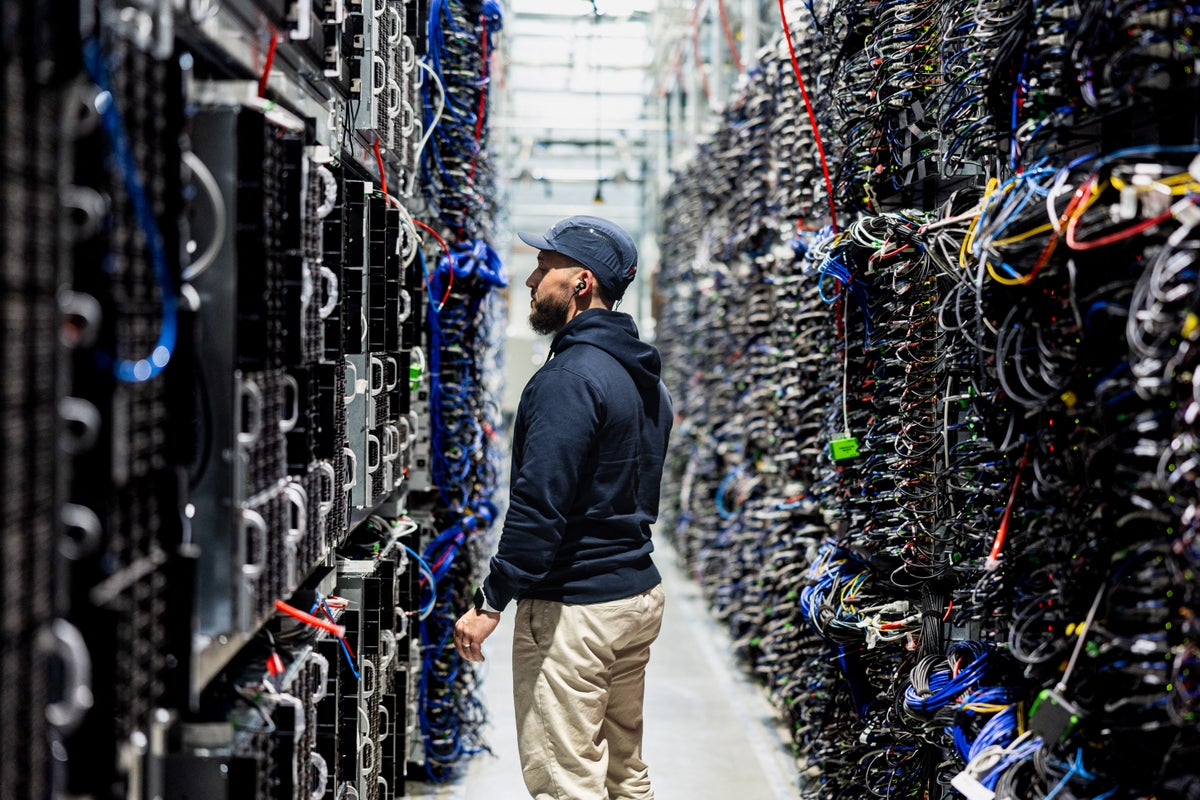
Amazon Web Services' $4 billion datacenter proposal in Wilmington, Ohio—demanding a 30-year property tax exemption—has ignited a broader crisis: tech giants are systematically overriding local democracy to seize rural land for AI infrastructure. The backlash is escalating into open conflict: arrests at council meetings in Wisconsin, police escorts required in Georgia, and experienced municipal leaders resigning in Ohio and Michigan rather than capitulate to corporate pressure. Oracle, OpenAI, and other AI firms are weaponizing legal leverage and financial incentives to force rezoning decisions that bypass community input, exploiting rural governments already starved of resources and expertise to resist. The result is a widening chasm between tech wealth and rural resentment—one that threatens to deepen distrust in local institutions already fragile from decades of disinvestment.

The AI Job Reckoning: History Suggests Disruption, Not Apocalypse

Block's 40% workforce reduction directly attributed to AI has reignited fears of mass joblessness, but historical precedent offers a more nuanced forecast: technology disrupts labor markets without destroying them. ATMs eliminated teller roles yet banks expanded branches and payrolls; the internet cut the workforce needed to generate $1 million in revenue from eight employees to six, yet created entirely new job categories. The pattern suggests AI will likely accelerate productivity and economic growth—but with a critical caveat: the transition will be brutal for displaced workers in coding, customer service, and data entry roles who may lack the skills or geography to access new opportunities. The real question isn't whether jobs disappear, but whether policy can manage the gap between job destruction and job creation.

Samsung's Bet: Replace Humans With Robots by 2030

Samsung is committing to a sweeping factory transformation by 2030, deploying humanoid robots, AI agents, and digital twins across its global manufacturing network to handle assembly, logistics, and hazard detection in environments too dangerous for workers. The strategy signals a seismic shift in industrial labor: rather than augmenting human workers, Samsung is systematically automating entire production chains, from quality control to environmental safety. The company will unveil its full industrial AI roadmap at MWC 2026 in Barcelona, but the timeline is stark—millions of factory workers worldwide face potential displacement as Samsung's competitors inevitably follow suit.

Who Controls AI? Anthropic's Pentagon Standoff Forces the Question

Anthropic has refused to allow its AI systems to power mass surveillance for the Pentagon, defying government pressure and warnings from Defense Secretary Pete Hegseth that the administration may compel compliance. The standoff mirrors Google's 2018 withdrawal from Project Maven after employee backlash, but raises a sharper question: should private AI companies unilaterally veto government use cases, or does democratic accountability demand otherwise? The clash exposes a fundamental tension between corporate ethics and national security—one that will likely define AI governance for years to come.

Monday, March 2, 2026

ServiceNow's New AI Tool Claims to Resolve IT Cases 99% Faster—But at What Cost to Workers?

ServiceNow launched EmployeeWorks and Autonomous Workforce, AI solutions designed to automate enterprise support processes, with its Level 1 Service Desk AI claiming to resolve IT cases 99% faster than human agents. The platform integrates Moveworks (acquired two months ago) and runs through Teams, Slack, and web browsers, enabling conversational AI to handle routine workflows. Early adopters including CVS Health, Siemens Healthineers, and the City of Raleigh report dramatic efficiency gains—Raleigh resolving 98% of initial support requests and Siemens saving 5,000 hours monthly—but the speed gains raise an uncomfortable question: whose jobs are being eliminated in the process? The Level 1 Service Desk specialist enters controlled availability now, with general release expected Q2 2026.

Lawsuit Claims Eightfold AI Secretly Scores Job Applicants Without Consent

A class action lawsuit filed January 20, 2026, alleges that Eightfold AI violated the Fair Credit Reporting Act by generating secret applicant "likelihood of success" scores without disclosure or consent—effectively treating algorithmic rankings as consumer reports. The complaint reveals that lower-ranked candidates are routinely discarded before human review while higher-ranked applicants advance, exposing the minimal human oversight in Eightfold's decision pipeline. If the court agrees that AI-generated employment scores qualify as consumer reports, the ruling could force sweeping compliance changes across the recruiting tech industry and saddle employers with significant liability for using opaque AI tools.

Illinois Mandates AI Transparency in Hiring—With Teeth for Recruiters and Employers

Illinois's House Bill 3773, effective January 1, 2026, requires employers to notify workers whenever AI influences hiring, promotion, discipline, or employment decisions—a sweeping mandate that captures resume screening, job ads, and video interview analysis. The Illinois Department of Human Rights broadly defines "use" to include any system output that shapes employment outcomes, leaving little room for technical workarounds. The law applies not just to employers but to recruiters and third-party hiring agents, expanding compliance obligations across the entire hiring ecosystem and creating enforcement leverage beyond corporate HR departments. Violations trigger penalties under the Illinois Human Rights Act, making this one of the nation's most aggressive AI employment regulations.

Block Data Analyst: I Watched AI Automate My Job, Then I Was Fired

Ivan Ureña-Valdes survived three rounds of layoffs at Block before being terminated in the company's AI-driven workforce reduction—despite solid performance. He watched in real time as artificial intelligence automated the core functions of his role, then became collateral damage in the efficiency push. Ureña-Valdes raises a sharper concern: while AI company employees command premium salaries, workers at traditional tech firms face displacement as companies optimize for automation over people—widening a two-tier economy where some profit from AI while others are replaced by it.

Top Economist Warns AI Job Losses Could Exceed White-Collar Recession Scenario

Claudia Sahm, creator of the Sahm Rule recession indicator, warns that AI-driven job displacement could prove worse than a rapid white-collar collapse—diverging from both doomsday predictions and Silicon Valley's productivity-only optimism. While acknowledging AI's potential to boost efficiency and reshape the economy, Sahm has pivoted focus to labor market mechanics as the US job market shows signs of deterioration. Her analysis suggests the real risk lies in a middle ground: neither apocalyptic nor benign, but a grinding, asymmetric displacement where some sectors and workers face severe disruption while others benefit, leaving policymakers unprepared.

61,000 AI Job Cuts in Three Months Expose Corporate-Worker Divide

A Reuters tally documents 61,000+ AI-tied job cuts announced since November across Amazon, Pinterest, WiseTech, and other major firms, crystallizing a stark divide between corporate leadership and workers. JPMorgan Chase CEO Jamie Dimon acknowledged at Davos that jobs would vanish but insisted new opportunities would emerge—a familiar refrain that offers little comfort to the displaced. The accelerating layoffs reveal the uncomfortable truth: companies are optimizing for profit margins today while betting on hypothetical job creation tomorrow, leaving workers and policymakers to manage the immediate human cost of AI integration.

Vietnam Becomes First Southeast Asian Nation to Regulate AI, Mirroring EU Model

Vietnam's National Assembly enacted comprehensive AI legislation requiring human oversight of generative AI systems—making it the first Southeast Asian country to establish such guardrails. The law targets misinformation, online abuse, and copyright violations while mandating a government-backed national AI computing centre and Vietnamese-language large language models. Yet success hinges on enforcement: analysts warn that regulatory frameworks live or die by implementation, and Vietnam's track record on tech governance remains untested, leaving questions about whether the law will meaningfully constrain AI harms or become symbolic.

Anthropic Defies Pentagon Ultimatum, Refuses to Strip AI Safeguards

Anthropic is walking away from a $200 million Pentagon contract rather than remove AI safeguards, rejecting Defense Secretary Pete Hegseth's demand to enable mass surveillance and autonomous weapons systems. CEO Dario Amodei argues that today's AI technology cannot safely handle such applications and that democratic values outweigh military pressure—a rare corporate stand that risks a 'supply chain risk' designation typically reserved for foreign adversaries. The standoff exposes a fundamental tension between Silicon Valley's safety-first ethos and the Pentagon's push for unrestricted AI capabilities.

Wednesday, February 25, 2026

Three Years In, GenAI Hype Still Outpaces Real Revenue Gains

An Eden McCallum survey of 300 businesses across the UK, US, and Netherlands exposes a widening gap between AI enthusiasm and business results: exploration of generative AI rose from 51% to 69% since 2023, yet only one-in-ten respondents have seen actual revenue changes from their investments. While roughly a third report positive impact, most AI applications remain pilots rather than scaled solutions, with just 57% of British and 50% of American executives viewing the technology as a genuine replacement for manual labor. Three years after ChatGPT's public launch, companies are harvesting cost reductions and efficiency gains—but the promised productivity revolution remains largely on paper.

M&A Boom Faces Cash Crunch as AI Deals Surge but Capital Dries Up

M&A activity hit $4.9 trillion in 2025 with 80% of executives planning to sustain or increase deal volume, fueled by AI-driven consolidation and improving macroeconomic conditions. But there's a catch: the proportion of capital allocated to M&A hit a 30-year low, as companies diverted funds to dividends, buybacks, capex, and R&D instead. Heavy AI infrastructure investments are expected to further squeeze M&A financing in 2026, creating a paradox—executives want to deal, but the cash to fund them is drying up.

Meet the 'Robot Wranglers': A New Job Born From Automation

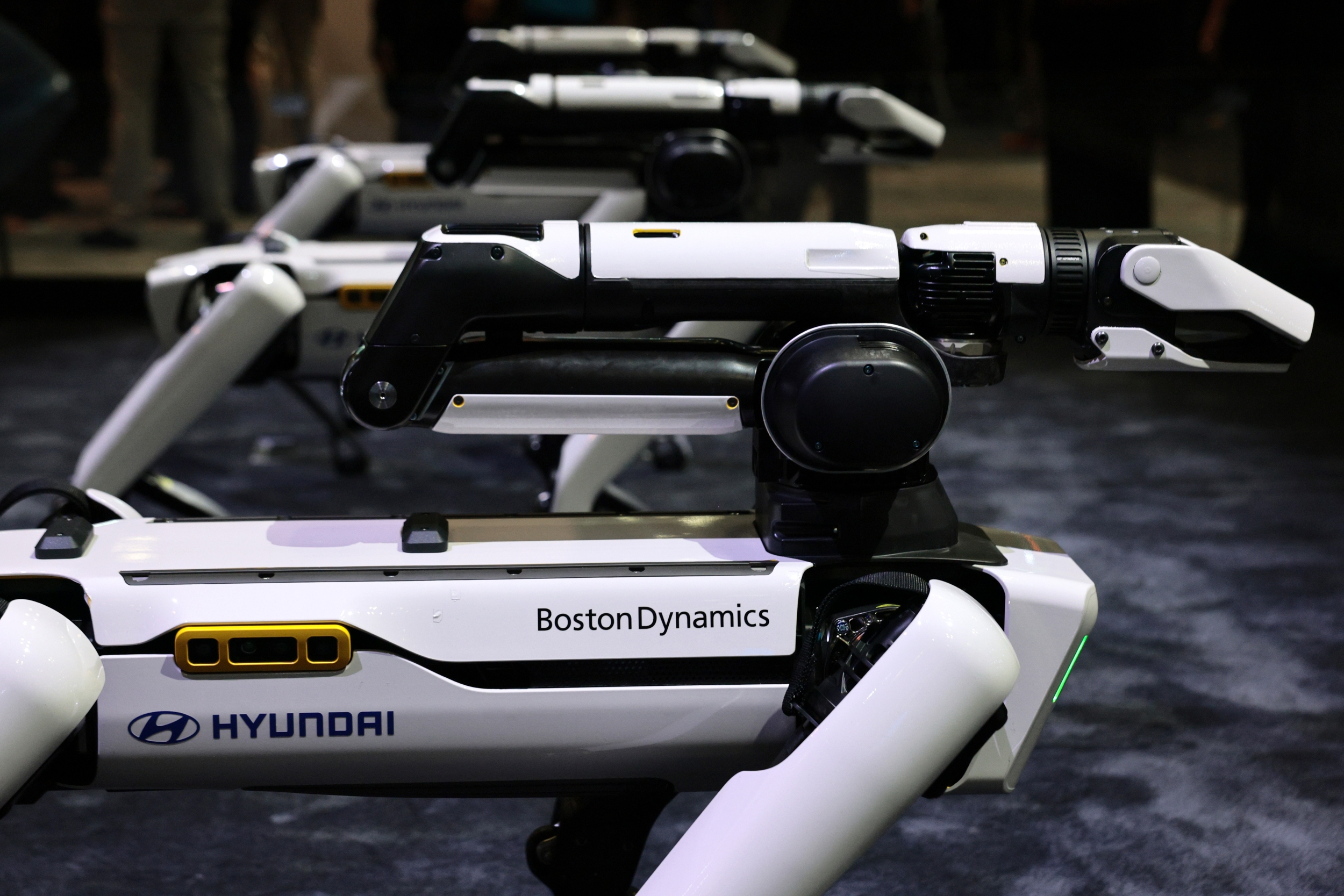
As autonomous delivery robots flood U.S. cities, a new job category has emerged: "robot wranglers" who maintain, charge, and rescue the machines when they malfunction or get stuck. Workers like former gig driver Charlie Snodgrass now manage robot fleets—Serve Robotics operates 2,000 bots across 20 cities and recently acquired Moxi, a hospital assistant robot—performing daily maintenance and responding to collisions and weather failures. But the math is sobering: while robot wrangler jobs will scale with fleet expansion, Amazon is reportedly planning to avoid hiring 500,000 people through automation by 2033, suggesting these new roles will replace only a fraction of the jobs lost.

Anthropic's AI Vulnerability Scanner Spooks Cybersecurity Market

Anthropic unveiled a new vulnerability-detection capability for Claude Code, triggering a sharp sell-off in cybersecurity stocks despite the tool being limited to code analysis. CrowdStrike CEO George Kurtz countered replacement fears, noting that even Anthropic's own AI acknowledges it cannot replicate the comprehensive work embedded in established security products. Industry observers suggest the market panic reflects broader anxiety about AI's expanding reach rather than an imminent threat—a reminder that investor sentiment often outpaces technical reality in the AI era.

JPMorgan Shifts Thousands Into New Roles as Bank Rewires for AI

JPMorgan is redeploying employees across the organization as it restructures operations to embed AI into core banking workflows, according to CEO Jamie Dimon's comments on the initiative. Rather than mass layoffs, the bank is reallocating talent to new AI-adjacent roles—a strategy aimed at retaining institutional knowledge while transforming job functions across trading, risk management, and customer service. The move signals JPMorgan's bet that retraining existing staff is faster and cheaper than hiring new talent, though it leaves open the question of whether redeployment is a long-term solution or a temporary buffer against deeper automation cuts.

WiseTech Global Cuts 2,000 Jobs as AI Replaces Manual Coding

Australian freight software giant WiseTech Global is eliminating 2,000 jobs—30% of its 7,000-person workforce—in what CEO Zubin Appoo called the end of "the era of manually writing code." The cuts, Australia's largest AI-driven layoffs to date, will hit customer service hardest with reductions up to 50% as the company pursues a "deep AI transformation." Appoo claims the restructuring will unlock productivity gains and deepen customer integration, but acknowledged the move exposes a vulnerability in software businesses that charge by user count—a warning shot for the entire sector.

Wayve Raises $1.5B to Scale AI That Drives Without Maps

London-based Wayve closed a $1.5 billion Series D, reaching an $8.6 billion valuation with backing from Microsoft, NVIDIA, and major automakers including Mercedes-Benz, Nissan, and Stellantis. The startup's breakthrough: an "embodied AI" system that learned to drive in over 500 cities in 2025 without prior local training—a generalization feat that sidesteps competitors' reliance on detailed maps and hand-coded rules. Wayve plans robotaxi trials with Uber in London this year, expansion to 10+ markets in 2026, and will launch supervised autonomy software for consumer vehicles in 2027 through partnerships like Nissan.

Pentagon Demands Anthropic Strip AI Safety Guards for Military Use

Defense Secretary Pete Hegseth is pressuring Anthropic to remove safety restrictions from Claude, threatening to invoke the Defense Production Act if the AI company refuses. Anthropic has signaled it will not comply, setting up a high-stakes showdown between the Trump administration's push for unrestricted military AI capabilities and the startup's commitment to safety guardrails. The clash underscores the growing tension between national security demands and AI safety principles.